Project summary.
GoLEAGUE was born as a basketball management tablet app. It would allow basketball league owners to create their league account, add teams, communicate with members, and especially with its sister mobile app, the GTEAM app, would let member to see live scores during the game.
Key objective
To integrated basketball's game schedules, scores and management into 2 different apps that could interact to each other.
my role
As the only UX/UI Designer working on this startup, my responsibility was to research, validate and translate the idea visually into real world dual working apps.
Business goals & product strategy
To replace the expensive league management software which was not efficient and provide a cost-effective, all-in-one solution to recreational basketball league owners.
Understand the problem
Recreational basketball league has been running the same way over decades: after a game, league owner would go home, take scores written in paper, type it in his computer. This process might take days before member could see the scores. Sometimes they would never see it because league owner simply didn't have time to enter the scores.
This manual process was boring and time-consuming. GoLEAGUE was born to end that endurance and bring back what the recreational league should have been: recreation and fun.
Starting off the right foot.
Aaron, the owner, has come up with the idea to help league owners automate tedious and time-consuming tasks, saving them time and money. In order for this to work, there would be 2 different-but-connected apps: the tablet GoLEAGUE app and the mobile GTEAM app.
goleague app
Built for league owners to register their own league. The app would allow the owners to register teams, integrate game schedules, customize league profile, send updates, communicate with members and more.
gteam app
Built for athletes and sport fans, this free app would let users build their own teams, recruit players, receive game schedules, scores and stats in real-time. GTEAM app communicates directly with GoLEAGUE app.
User research.
Learn what works, and what doesn't.
We took our time and interviewed couple of league owners and some recreational basketball players. We spent couple nights a week for several weeks to watch the games, usually started around 6:30pm and had some good conversations with the players and owners.
League owners were more than happy to share with us what are those things he were not happy about, and he wished he could have some kind of software to automate some of his daily tasks: payment system, manage members and teams, scores automatically updated on website, and some kind of better communication between his league and his teams.
key findings
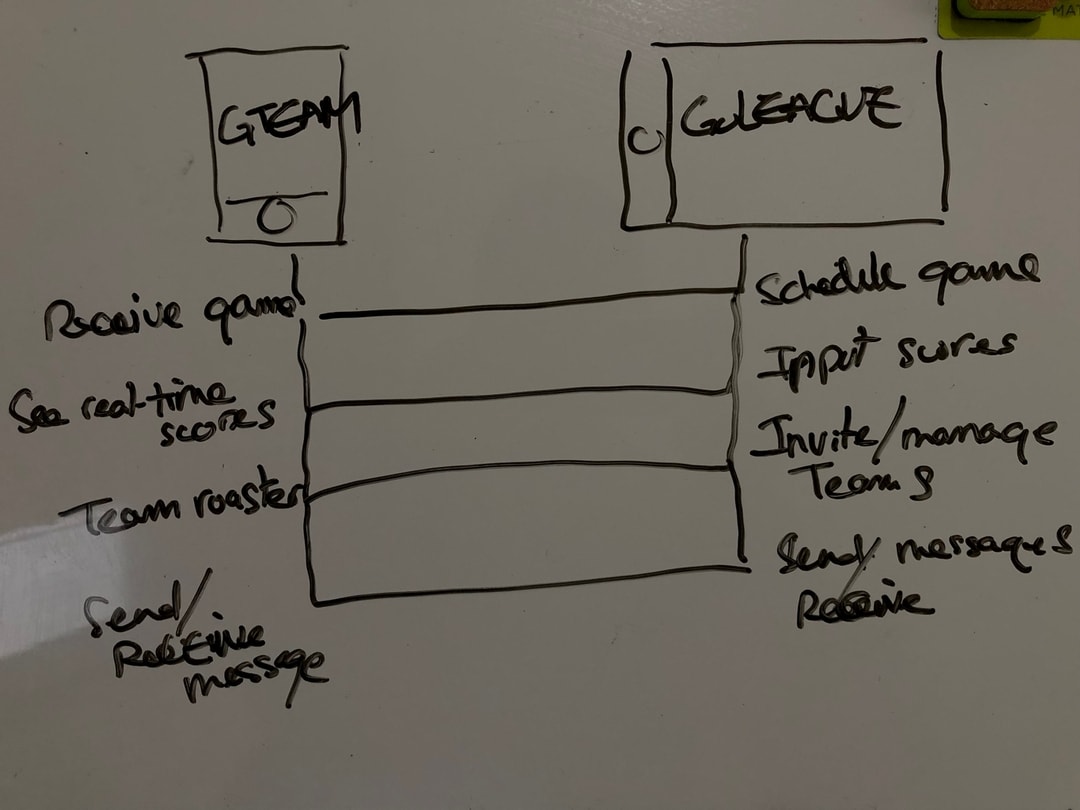
Having some good understanding about the problems, we then sit back and started drawing some of the solutions, and divided them into different phases: if we thought the problem was critical, we would prioritize and put it in Phase 1, while the others would be forwarded to future stages.
To make it work, we had 2 separate users: the league owners and athletes/fans. Their needs and tasks will be different yet related to each other, so we started with the user flow.
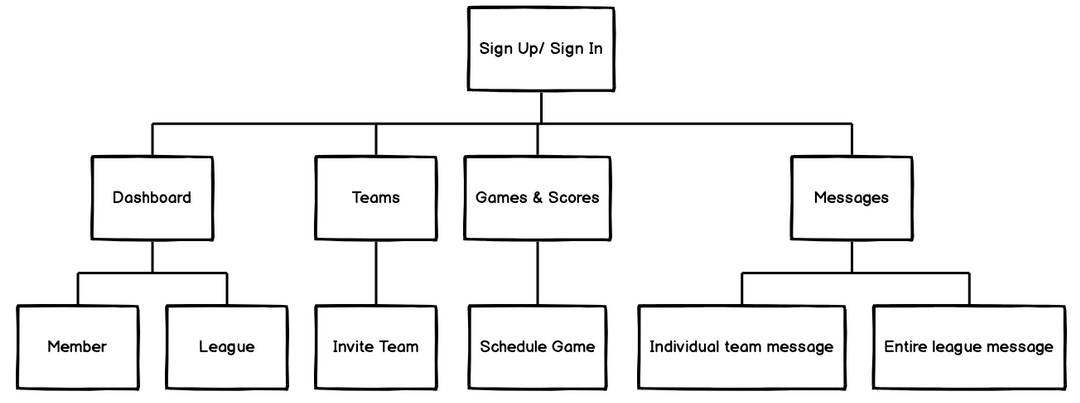
GoLEAGUE user flow.
Now to the league.
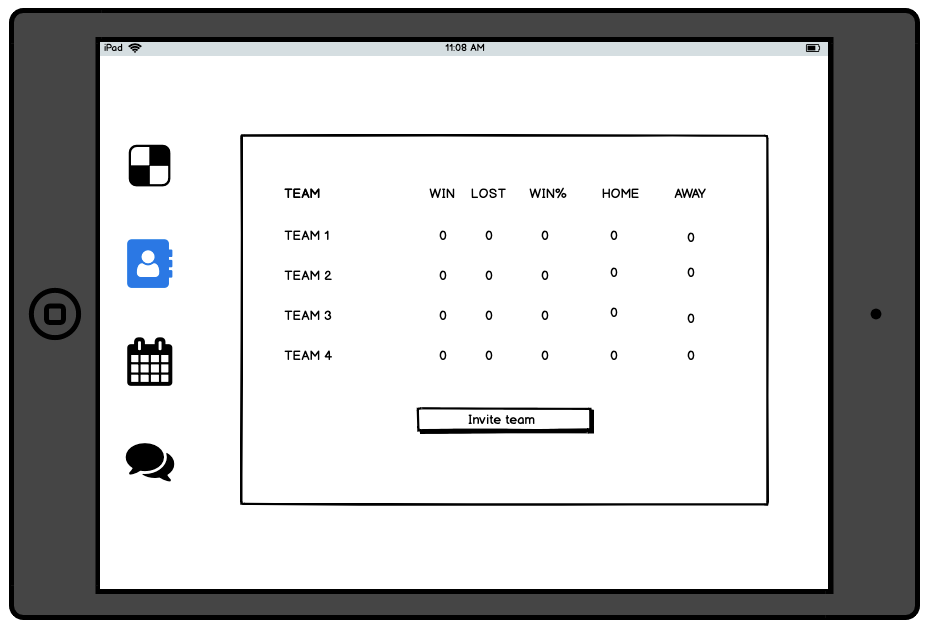
The league owners would have 4 main screens with 3 screens to do the tasks, and one screen we called "Dashboard" which would provide the summary info about his league.
The other 3 main tasks he needed to do including: invite teams to his league, schedule games /input scores, and send messages to members.
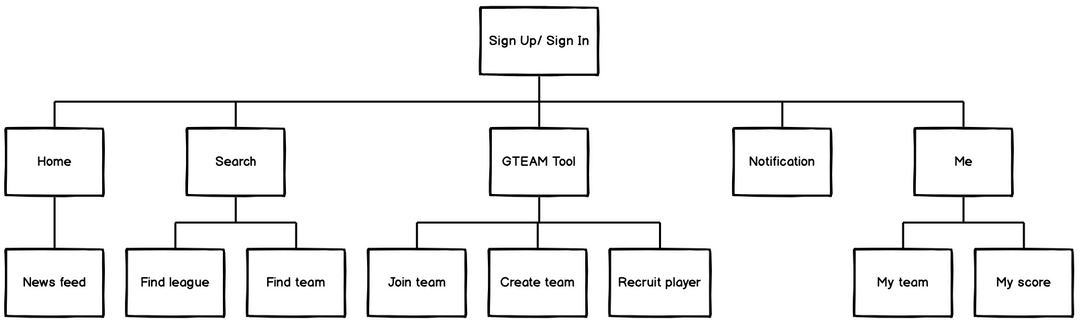
GTEAM user flow.
Connect with the league.
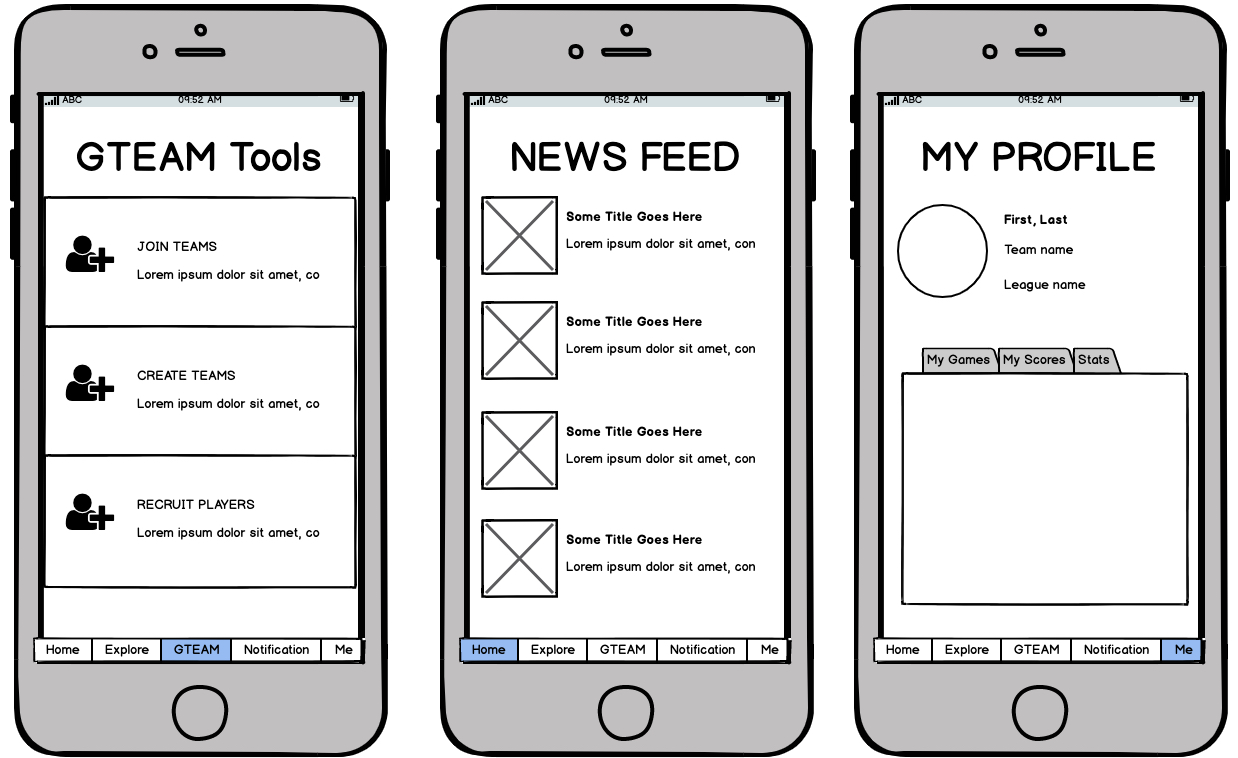
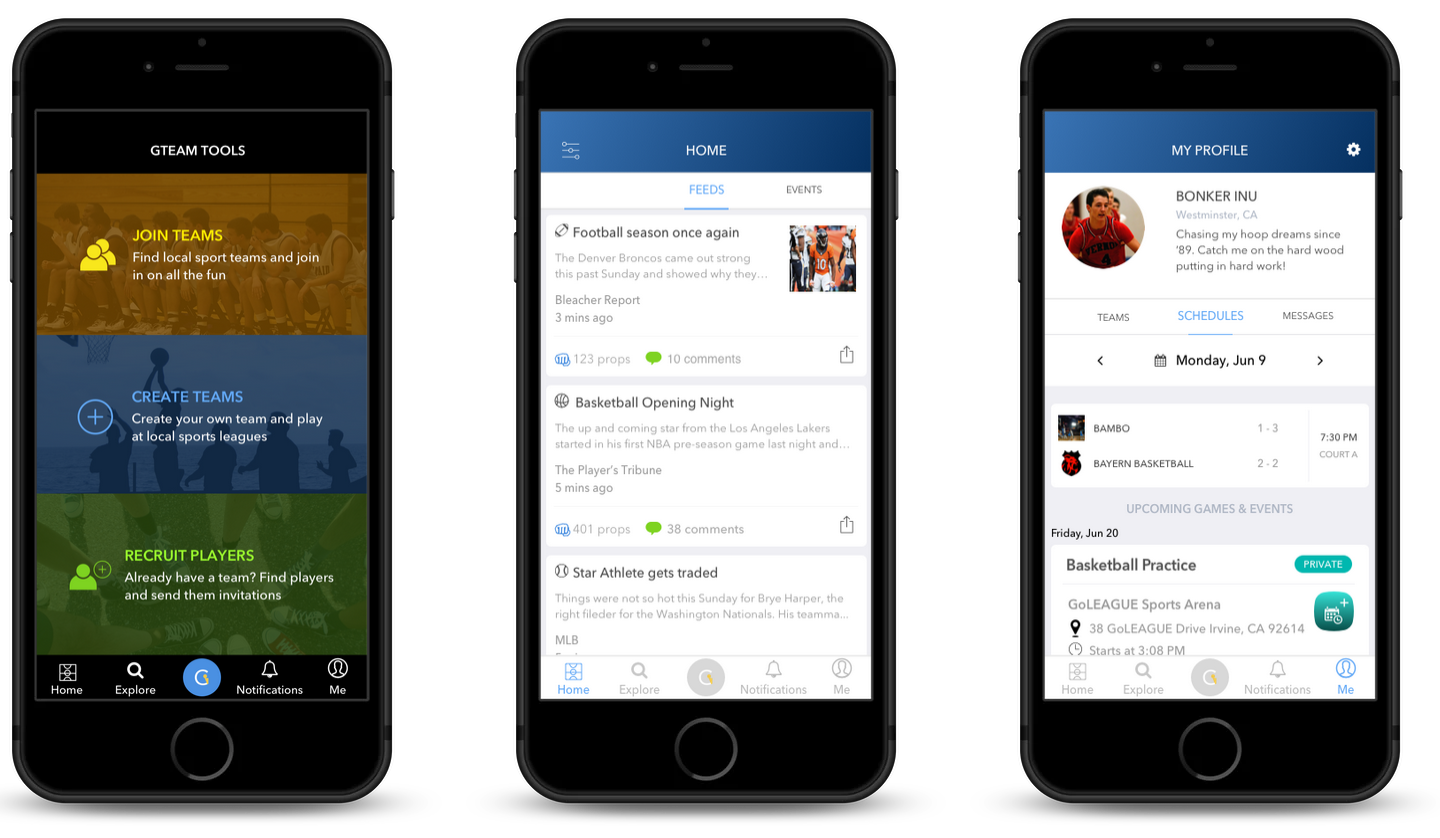
Players and fans, on the other hand, would need different tasks: the most 3 important tasks we grouped them into a section called "GTEAM Tool": join teams, create a team and recruit player (if he already had a team).
The other sections would include: Home with some relevant sports news, Search to find players, leagues or teams, Notifications, and his/her own profile.
Low-fidelity wireframes.
Solve problem visually.
Once we understood the flow, it was time for me to started sketching it out and expressing the idea of what it should look like. In this stage, we focused on the overall experience and how the 2 apps should function individually and to each other.
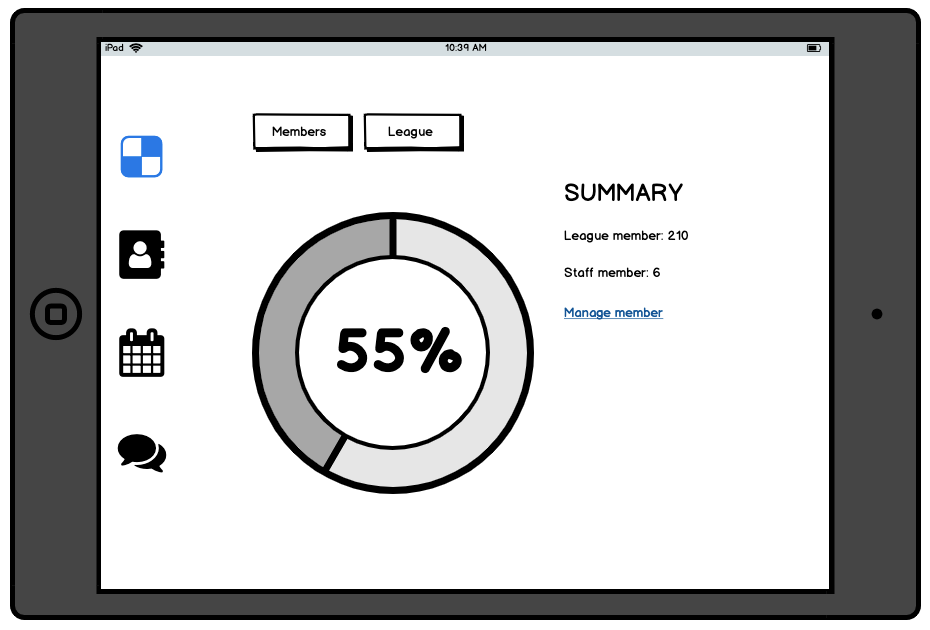
League dashboard.
An overview for the owners.
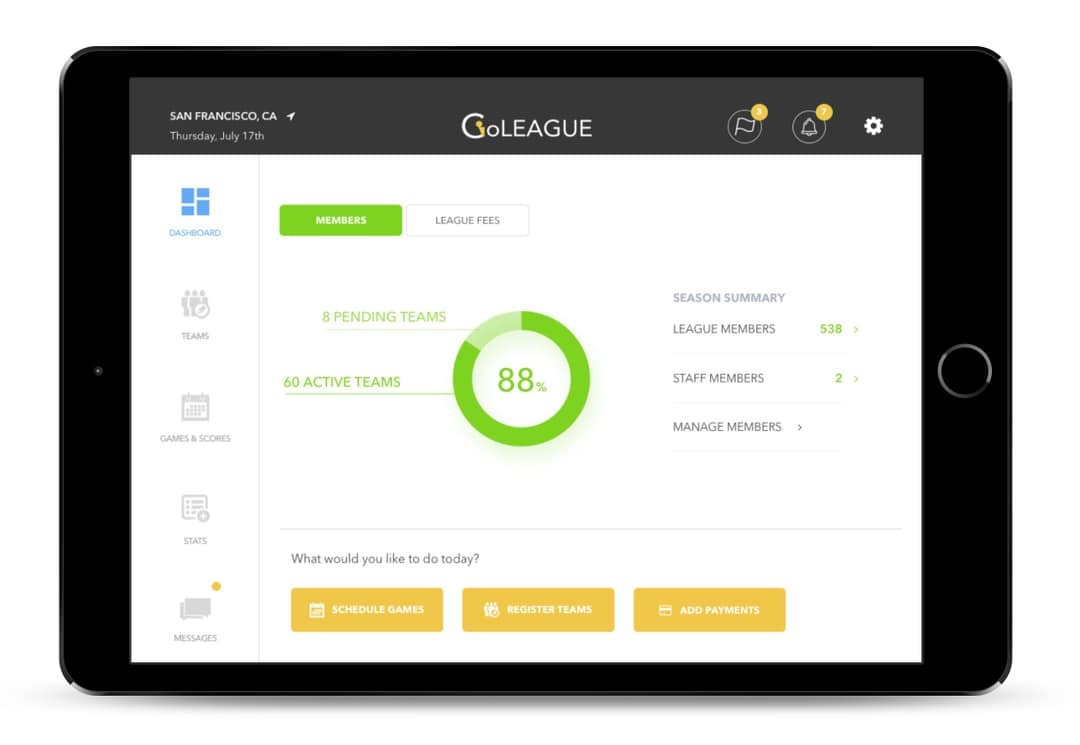
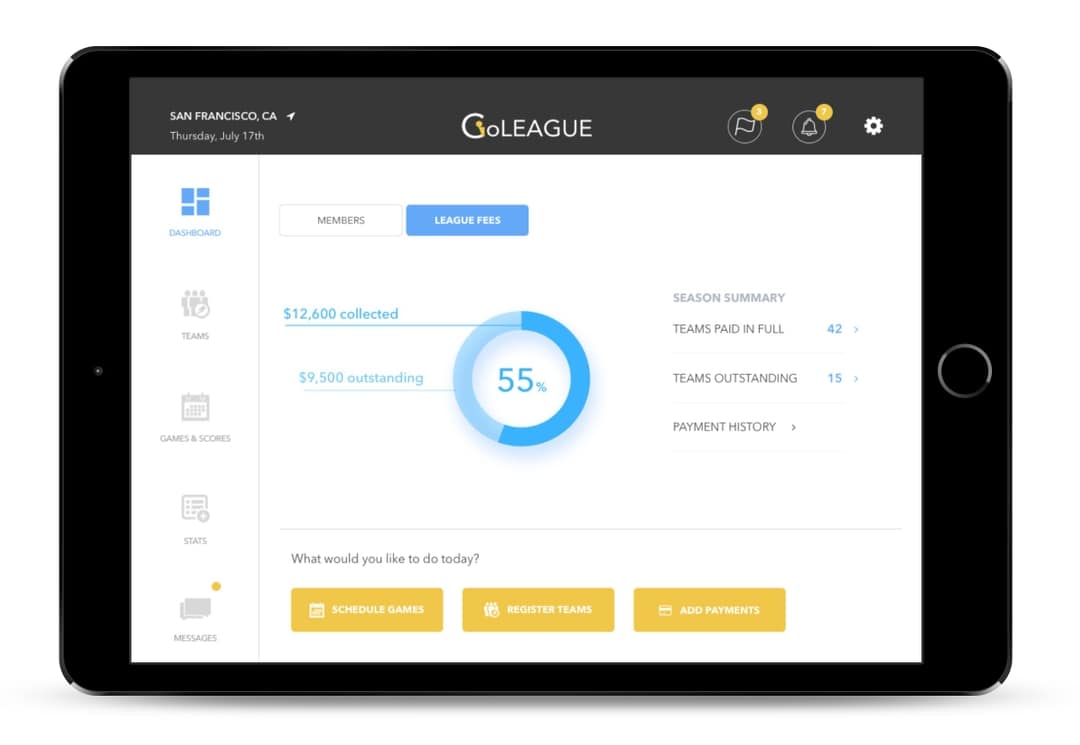
The Dashboard would allow league owners to have an overview of their league, staff members as well as payment collection. This Dashboard would be the first thing the league owners see every time they log in, giving them a comprehensive understanding of what's going on with the league.
In-app messaging.
Instant communication.
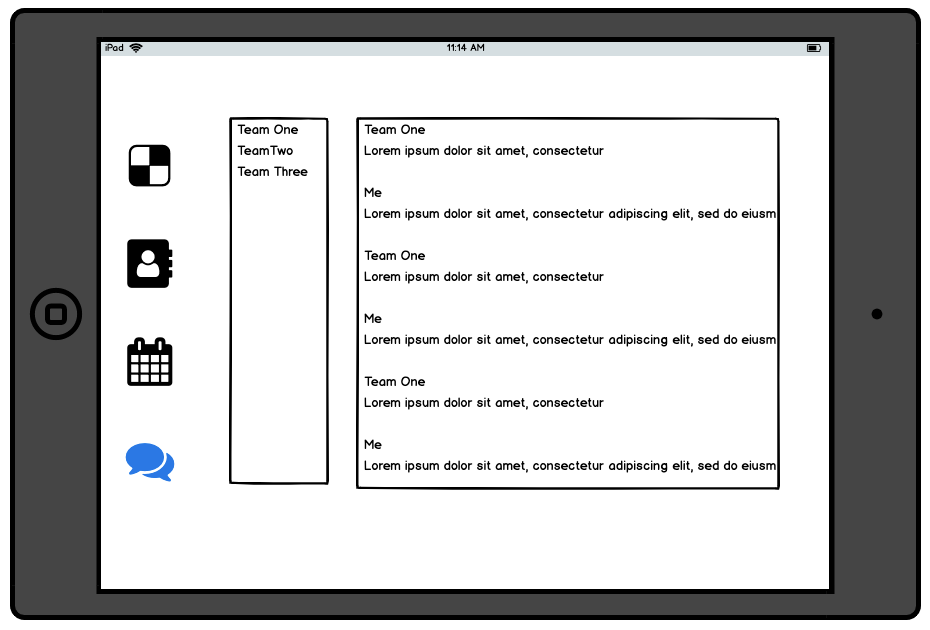
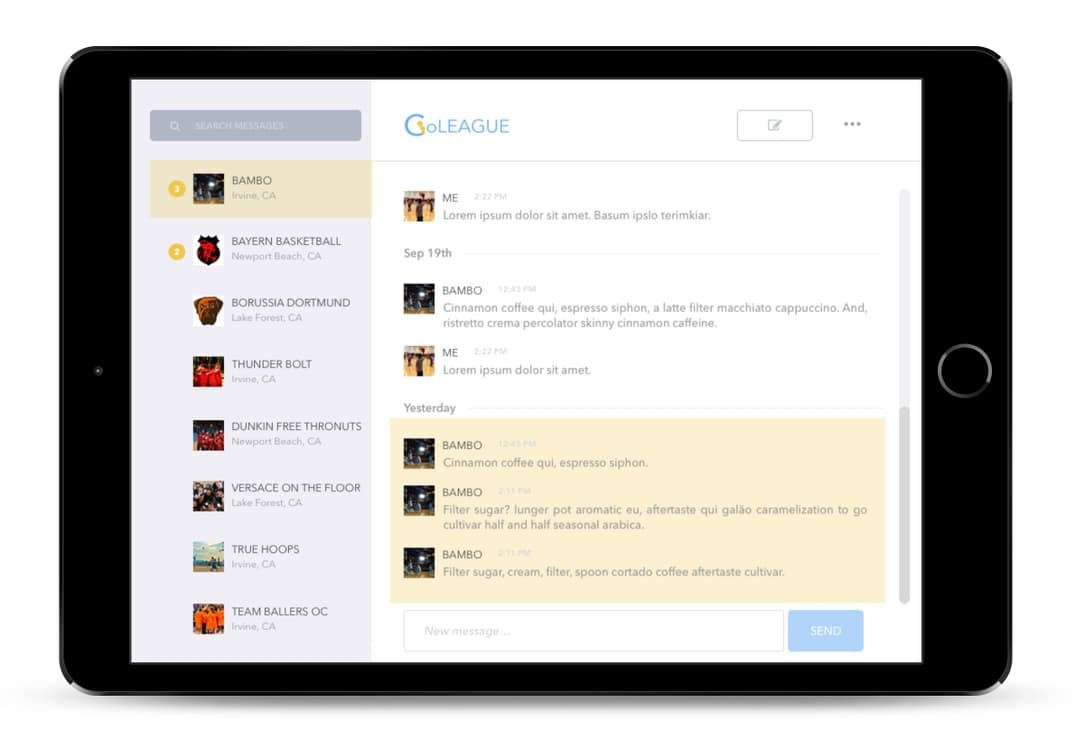
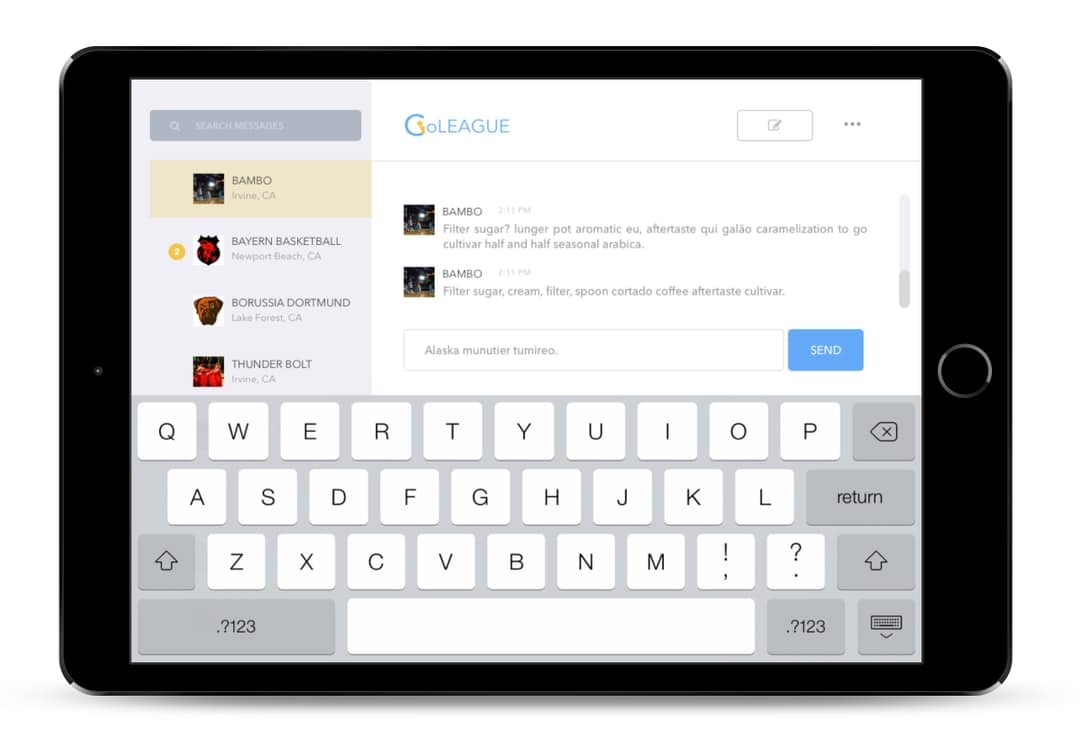
Communication is key. And GoLEAGUE was designed to keep communication as seamlessly as possible. League owners could send messages to the entire league members or to an individual team.
Games & scores.
The joy of all.
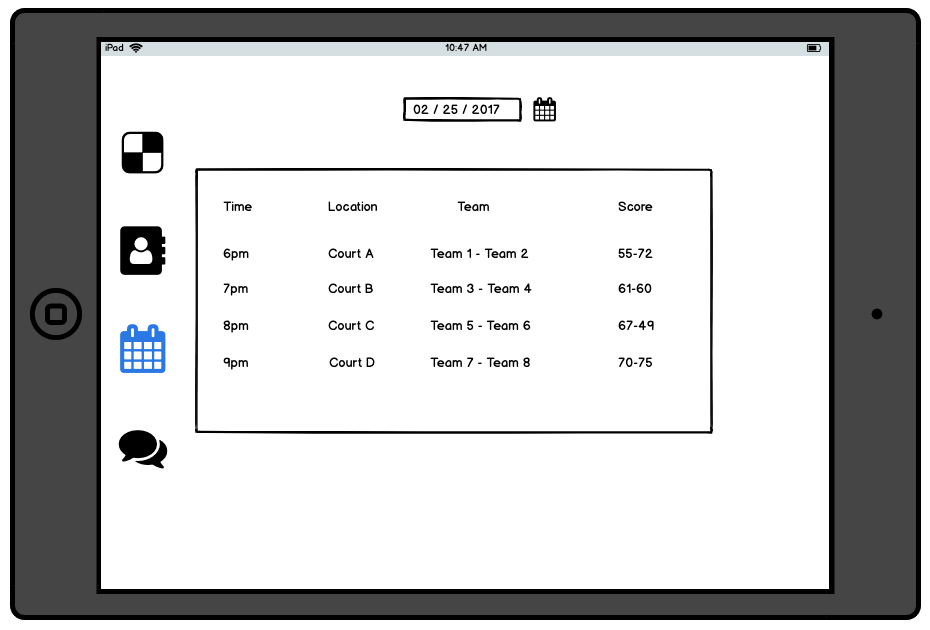
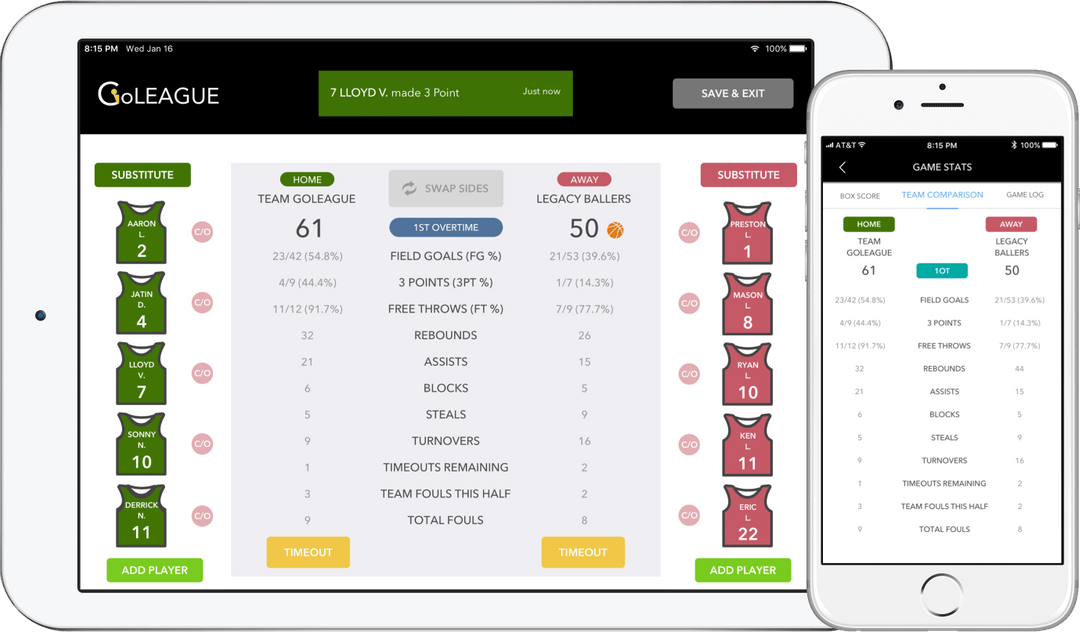
One of the most important features. This would allow league owners to enter the scores during the game and any other members with the GTEAM app can see it in real-time. While interviewing, this is the functionality that we got "Wow, are you serious?" the most, so we spent a significant amount of time to figure out how it should work.
Integrated game schedules.
Keep the games comin'.
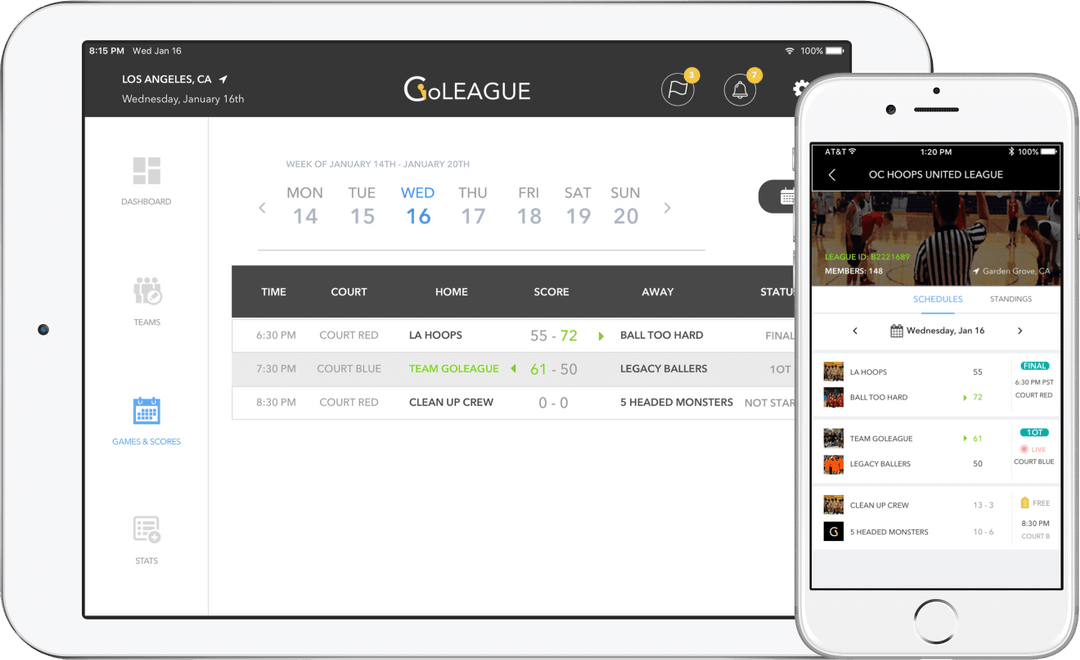
League owners could schedule multiple games at once. As soon as they are finished, all team members will receive it directly on their phones. The same goes with an update or reschedule, saving a huge amount of time.
Per our calculation, this feature alone would already save hundreds of hours per year for league owners.
GTEAM app.
The independent add-on.
The GTEAM app started to make more sense as we're building the GoLEAGUE app. While originally this app would not work without the GoLEAGUE app, we finally designed for this mobile app could work independently, even though it would be more powerful when connecting to the other app.
User testing.
In real time. With real games.
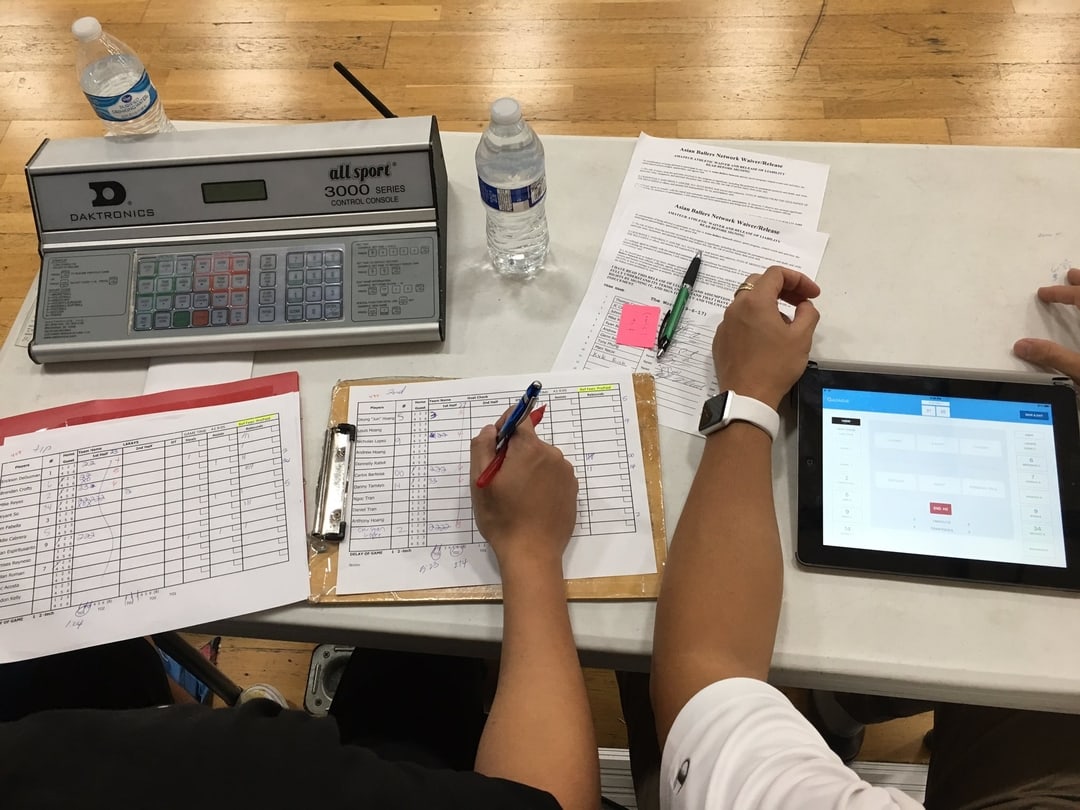
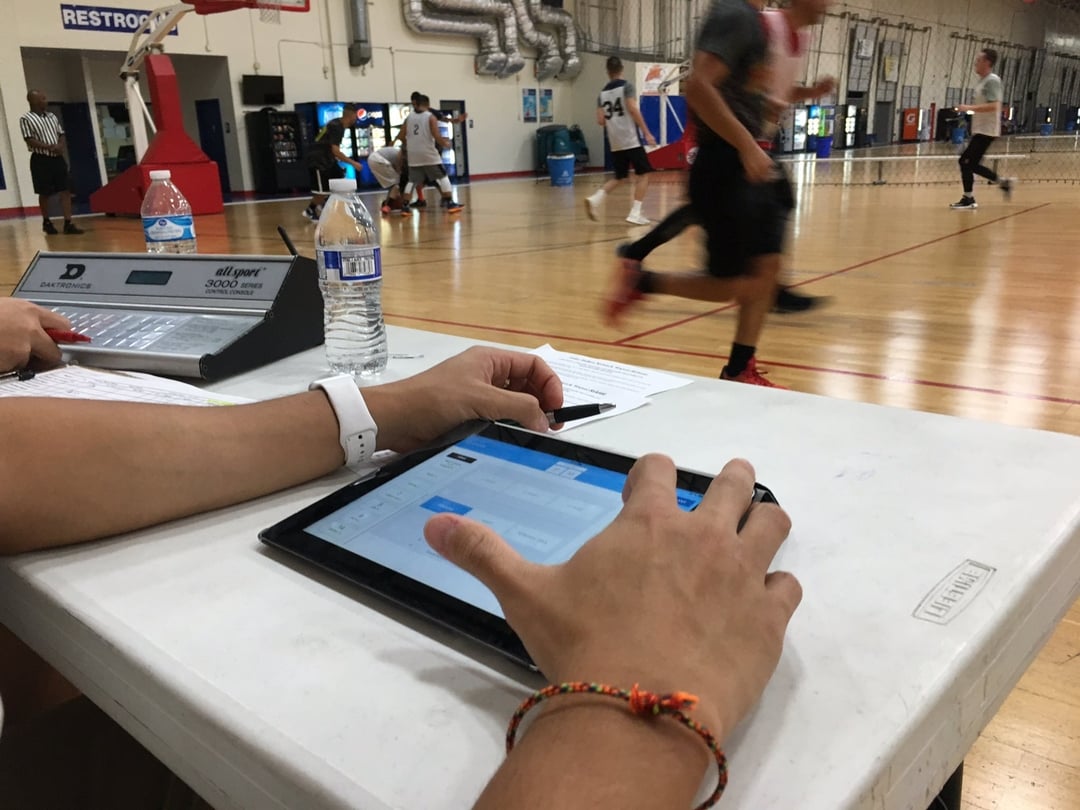
What's better than designing the app? Observing the league owners actually playing with the app during games.
On the left image, we could see 2 things happening: the left side is the boring, manual score entering process with a pen, paper, while the right side, only the iPad was needed.
We conducted many similar testings with our users, receive valuable feedbacks to continue to build the app with the best possible user experience.
GTEAM onboarding.
The games. Simplified.
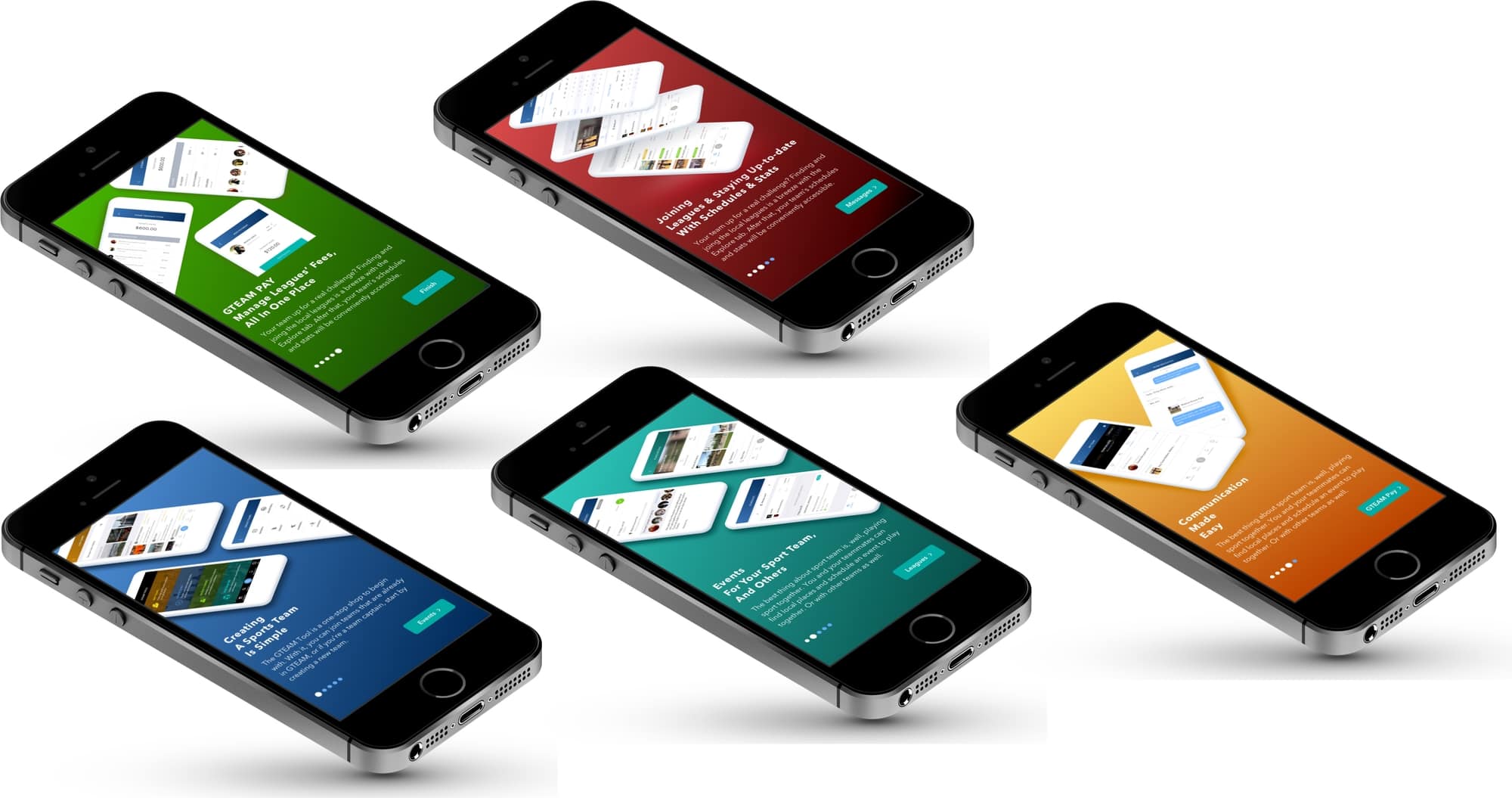
The onboarding was the first thing our users experience after downloading the app. It quickly showed the features and values the app would bring with, helping our users have a better understanding of the first time.
GoLEAGUE onboarding.
Keep 'em organized.
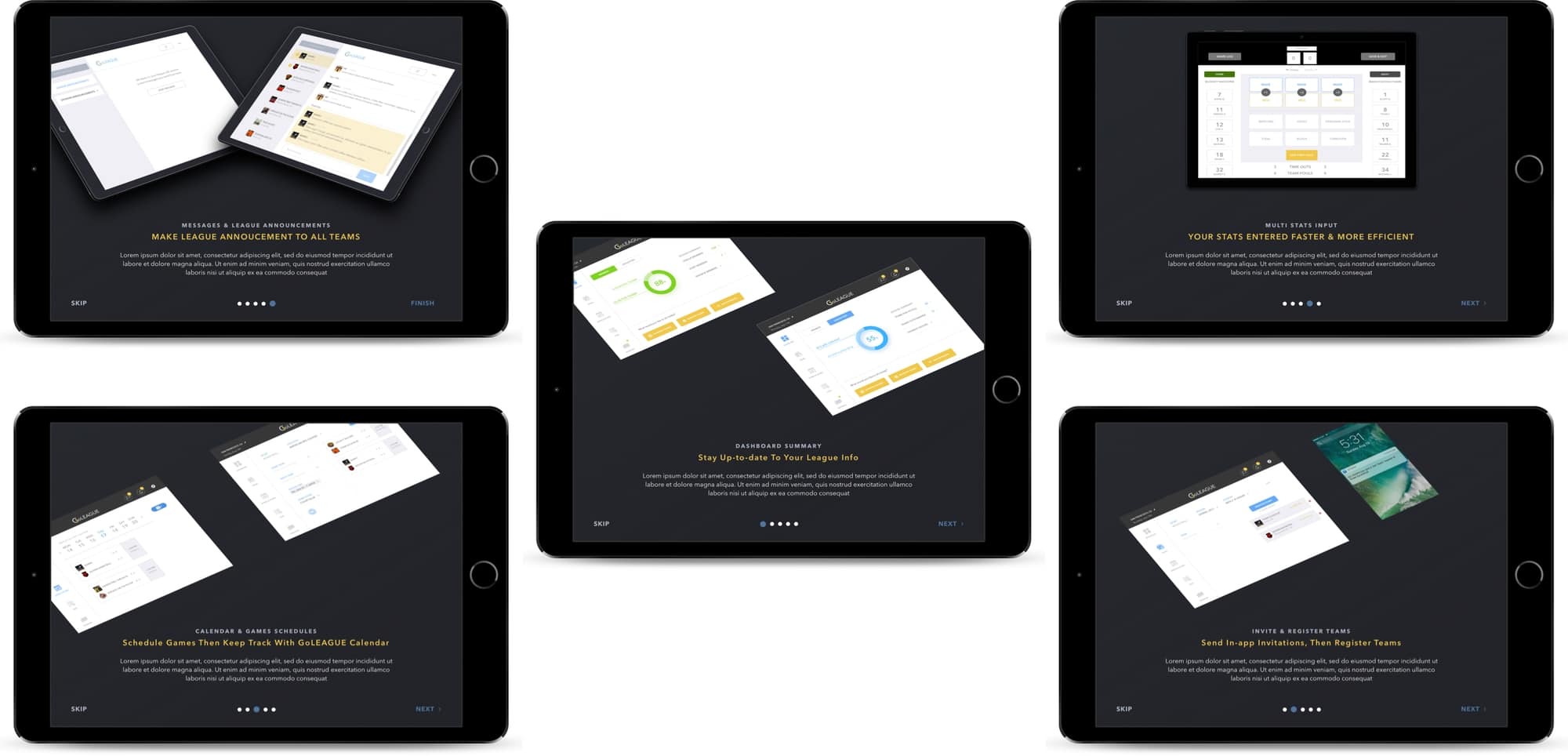
Similar to the GTEAM app, the onboarding of GoLEAGUE would help league owners quickly capture the core functionalities from this tablet app.
Conclusion.
This dual apps project was one of the most challenging projects I have ever worked with. It is also where I learned the most to become more efficient as a UX/UI designer.
Many time going out on the basketball field at night gives us a unique experience on how users actually react with something never existed before.
Test early, test often is one of the most valuable lessons we learn.