Project summary.
Currently, there are 3 digital dive logs under the PADI umbrella (Scuba Earth, Club, PADI app). Each of these provides a different experience and some of the data don't sync to each other. This is a huge pain for users who will get confused about their logged dives data.
The .COM team has decided to step up and build a new, consistent and whimsical experience for our students and divers when it comes to log a dive.
Key objective
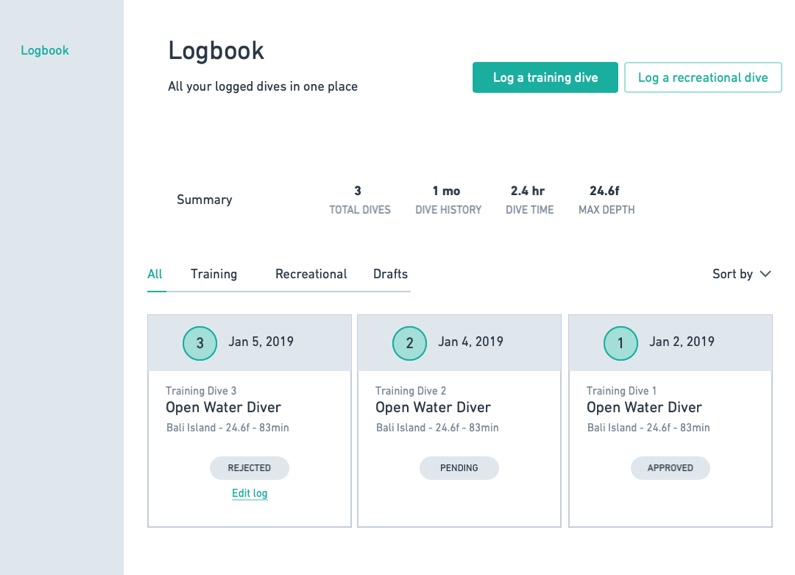
Student and recreational divers need a way to access all of their logged dives and log their dives in one consistent place (both training and recreational)
my role
I'm a Lead UX Designer for the new Logbook project at .COM team. I work alongside the stakeholders, product owners, engineers and other team members to research and build the Logbook that everyone can have fun using it.
Business goals & product strategy
With the sunset of the Scuba Earth and PADI Club (the 2 current platforms for Logbook), the new Logbook will need to be removed out of those properties and live somewhere else.
MVP features requirement.
Collaborating with our Product Owner, we have come up with the requirements needed for the logbook.
1. Log type: training and recreational.
2. Entry type: manual.
3. Course: Open Water Diver
4. Approval: through OLPC 3.0
5. Data: Scuba Earth, Club, and PADI app logged dives auto-populated into the new logbook.
6. Out of scope: Marine life observation, Dive site locator, Photo/video upload.
7. Where: Dashboard (PADI.com)
8. Go to market: Pilot with OW Prototype
9. Primary user: Open Water students
10. Secondary user: Recreational divers
Competitive analysis.
A comprehensive understanding.
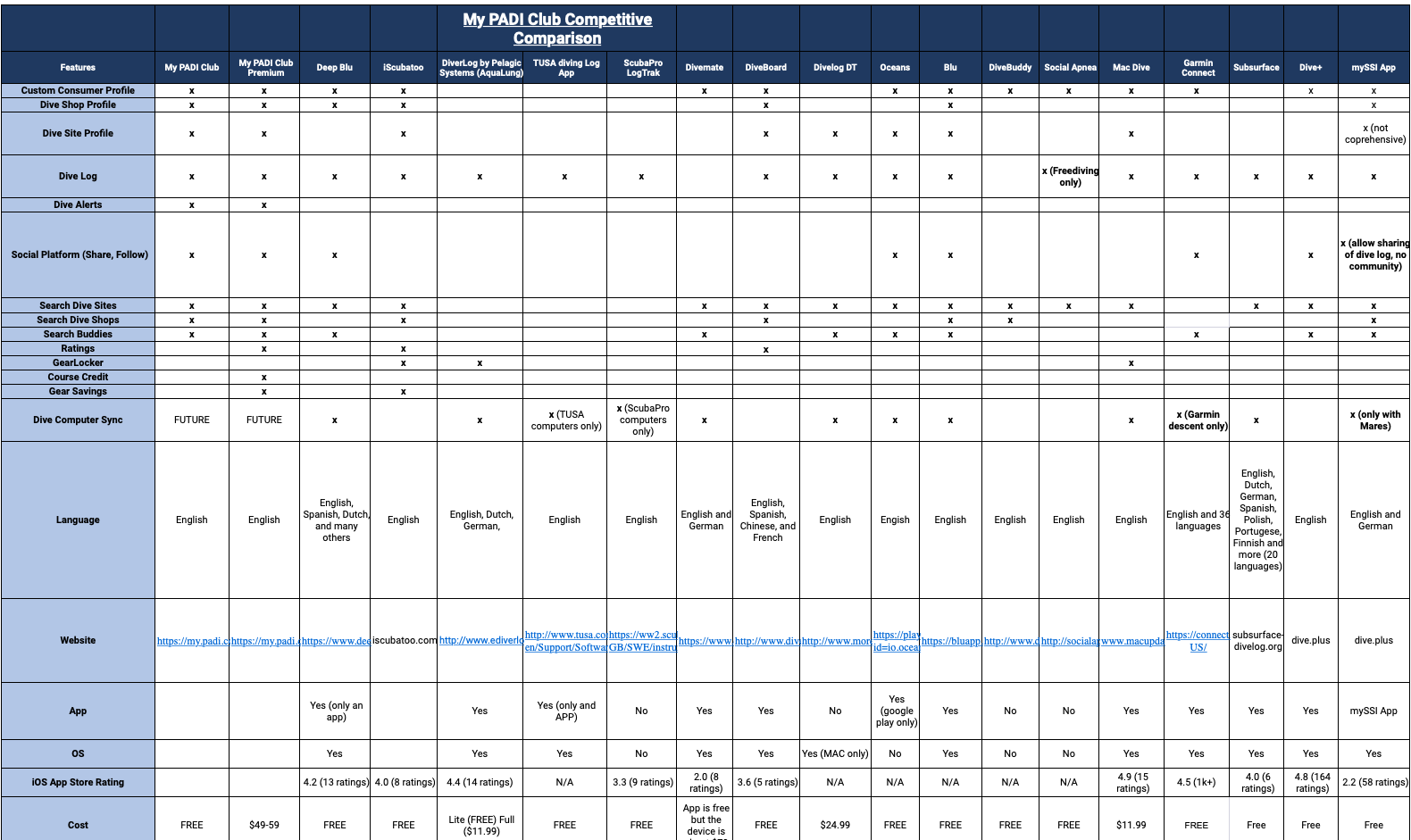
The Competitive analyst allows us to understand how the competitors work with the current logbook platforms, what the pros and the cons are. With this important understanding, we build a solid knowledge of what needs to be done for our own logbook.
key findings
Performing the competitive analysis helps our team to get better insights about what others are doing well, and what not. With the good understanding, we're better off making informed design decision.
User flows.
Let the users log simply.
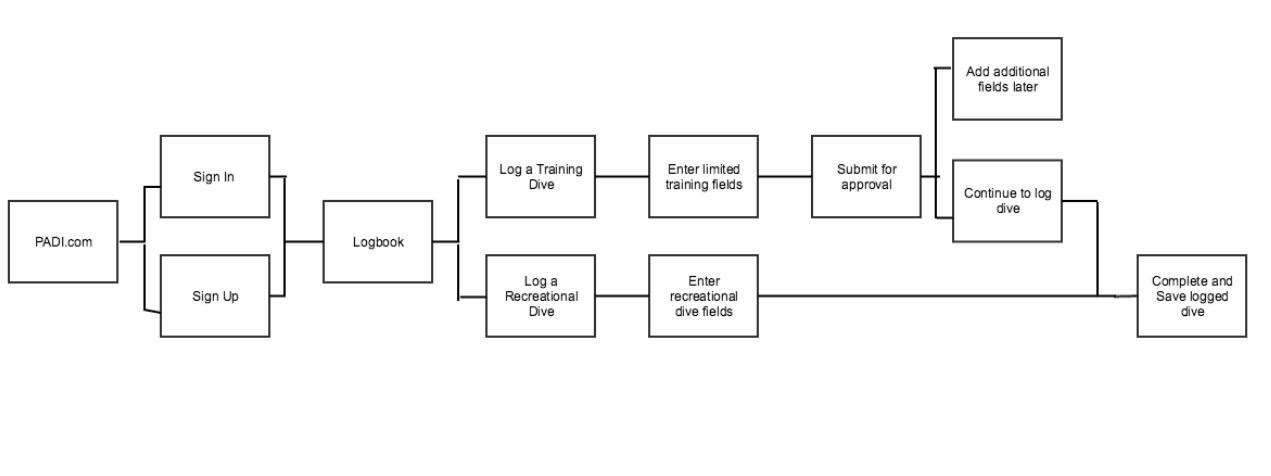
The requirements from Mo, our product owner, are simple and clear. We're building a user flow for 2 different types of user: a student who logs a training dive, and diver who logs recreational dive. Although the experience is similar, student's flow requires approval from the instructor for their logged dive, while recreational divers don't.
Low-fidelity wireframes.
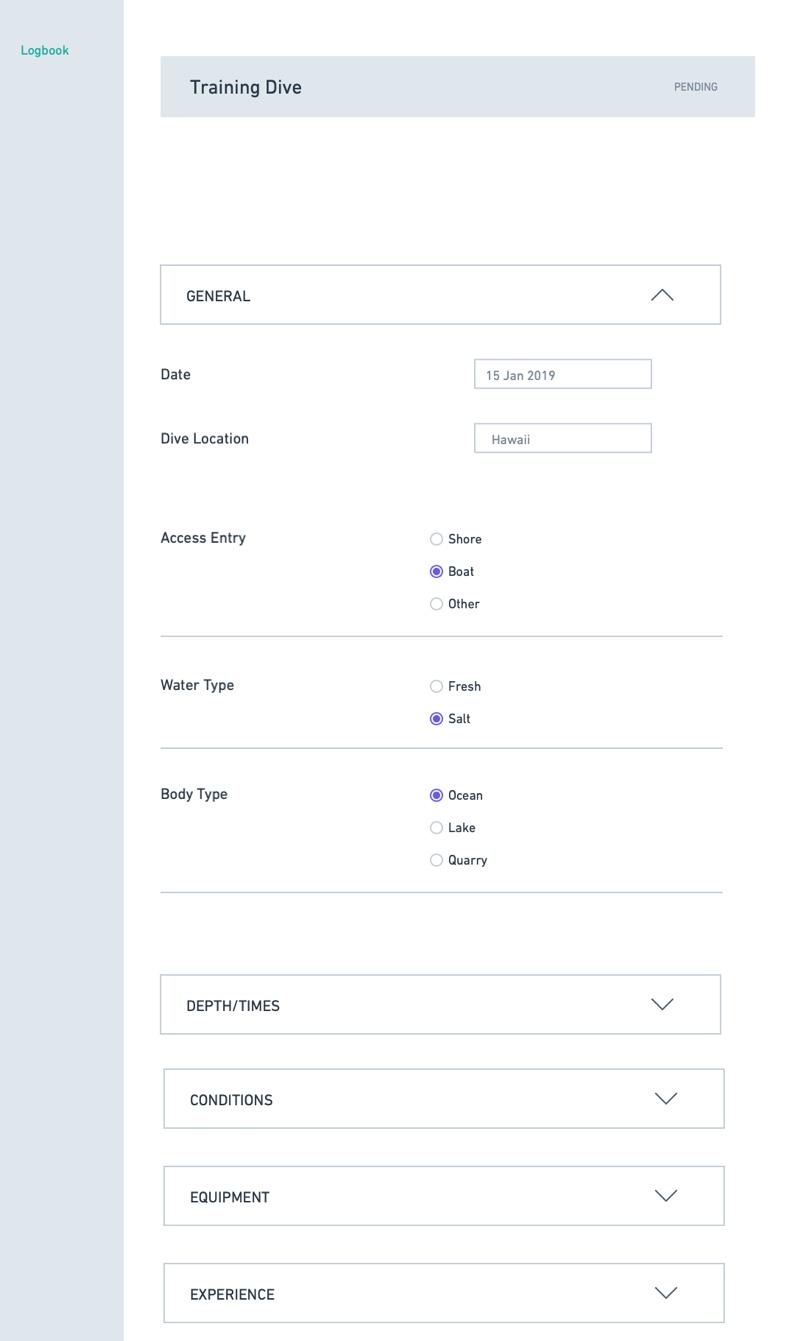
The lo-fi wireframe helps us shape a clear understanding of what fields should be included in the logbook. With the expects's help from the Training team, we were able to finalize and overs info required for training & recreational dive.
Usability testing.
The Competitive analyst allows us to understand how the competitors work with the current logbook platforms, what the pros and the cons are. With this important understanding, we build a solid knowledge of what needs to be done for our own logbook.
platform
Click-through prototype on desktop.
participants
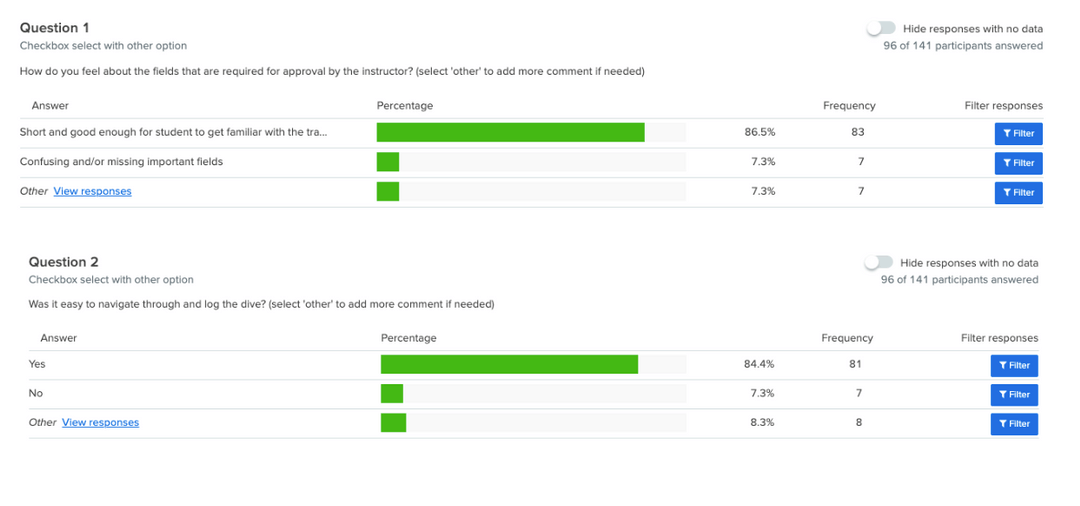
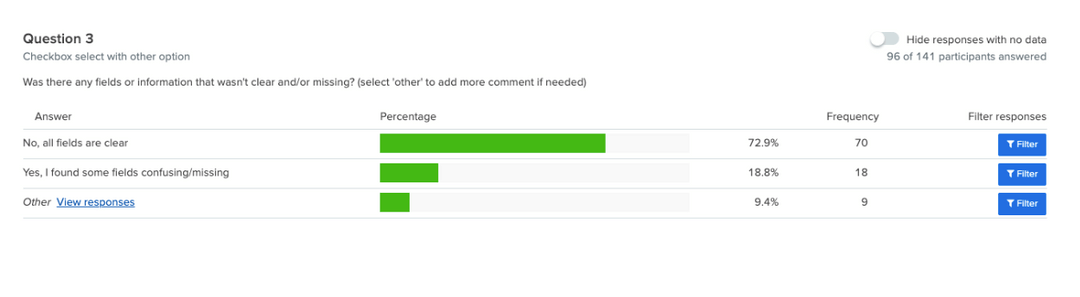
95 users, including: divers, instructors and internal stakeholders.
key findings
1. Completed skills to be added under the "Training Dive" screen.
2. Keep it short and simple. Only a few fields required, others optional.
3. Mobile app/log offline functionality is highly requested.
4. Ability to add photos/videos (future phase).
5. Data issue fixes from the current logbook experience.
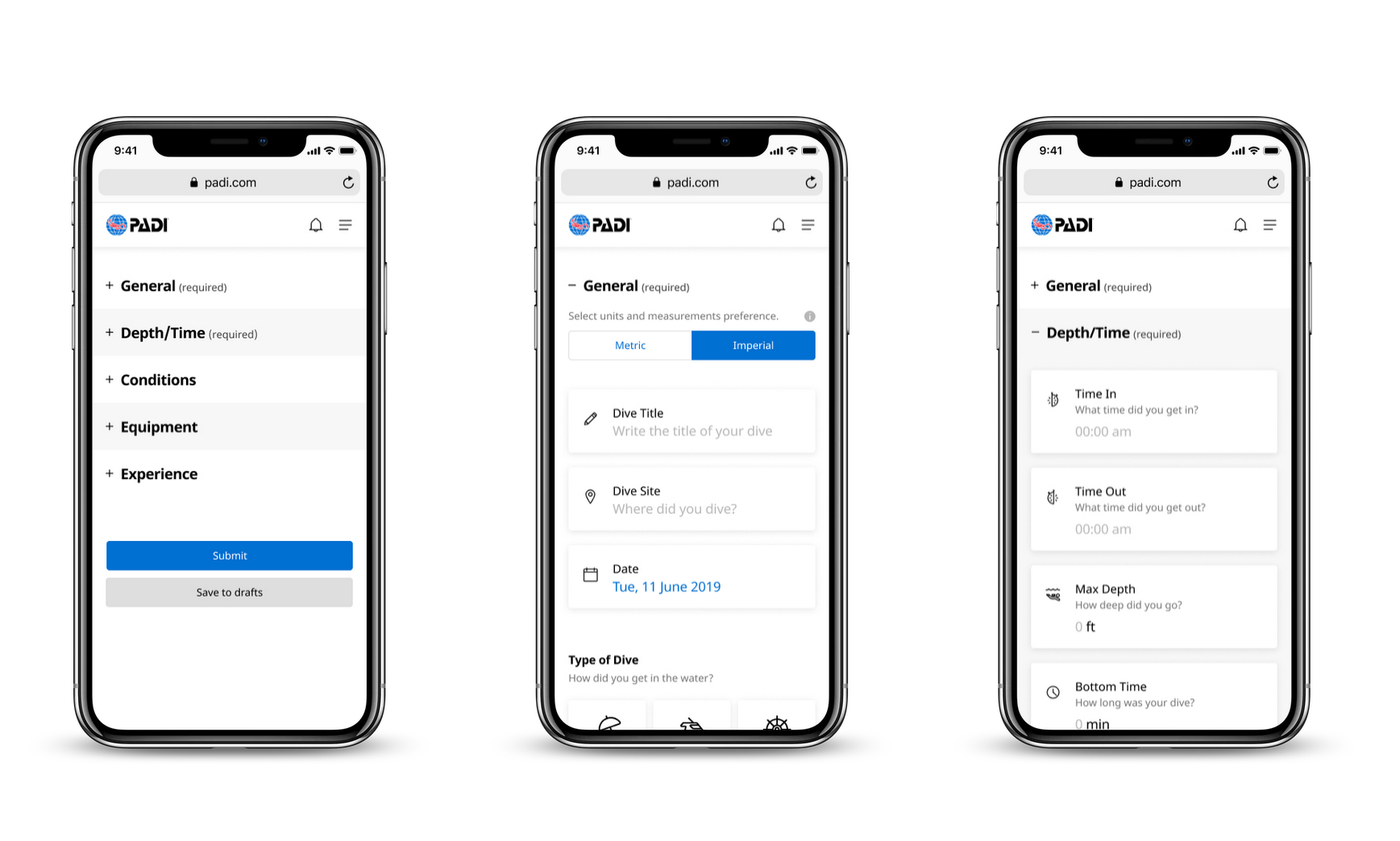
Click-through prototype.
After running usability testing, we allow participants to see and experience the product to seek valuable feedback and make changes accordingly. After that, we get back to evaluate and do this as many times as it takes until finished product matches expectations.
Delivery.
After many times of hard work and effort, the team is able to make final changes and delivery of the finished product.
Conclusion.
As a UX designer, I learn valuable steps and lessons to tackle challenges in this project. Although this is considered a "re-design" project, there are many new things we have to implement to ensure the consistent and best possible experience for our users.
Based on valuable feedback, the team is ready to continue to improve the product on the next stage, as well as build a native mobile app.