Project summary.
PADI mobile app users haven't been very happy for a quite long time. The app was built years ago and while it delivered what it needed to, it does not quite meet the current technical and experience requirements. Now our users expect more of the app, meanwhile some current features either don't work, or keep crashing while using.
PADI Global team is tasked to bring a better experience to our mobile app users.
Key objective
Mobile app users should be able to use the app with one of the most important features: eCard, for online and offline accessibility.
my role
As a lead UX designer at the Global team, the team's responsibility to re-build the new PADI app, my job is to lead the UX methodology to figure the best possible solutions for the app and collaborate with PM, engineers, stakeholders, and designers to deliver the required outcome.
Business goals & product strategy
- Resolve customer eCard access issues.
- Increase app downloads and the usability of the PADI app.
- Improve the PADI app rating (as of Oct 2019, the current app rating is at 1.7 stars (iOS) and 3 stars (Android).
- Build a consumer app that is a companion resource app for divers.
- Introduce non-divers/divers-in-training into the diving community.
Mobile app roadmap.
MVP (phase 1)
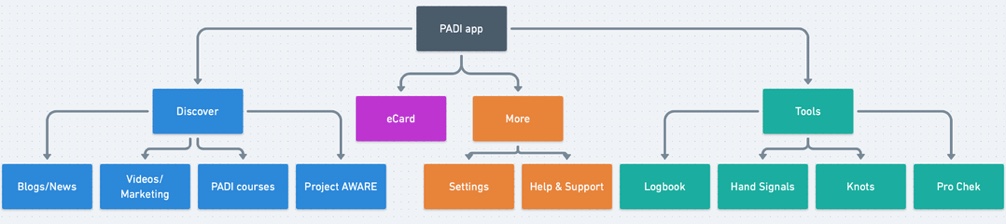
eCard accessibility (online and offline)
Discover/Homepage
Hand signals
Knots
Prochek
Logbook (with the possibility to support offline)
Phase 2
Logbook full features
Dive computer sync
Offline capability for all (Logbook, Hand signals, Knots)
Dive Shop Locator
Phase 3
Gamification
Gear/Travel checklists
Mobile app definition.
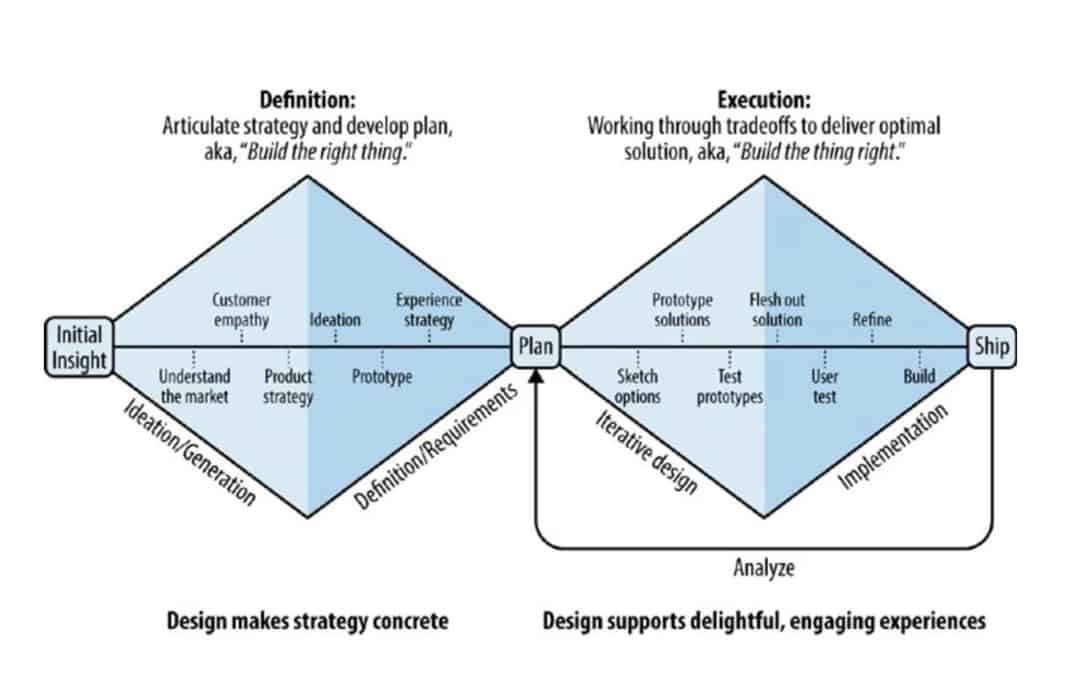
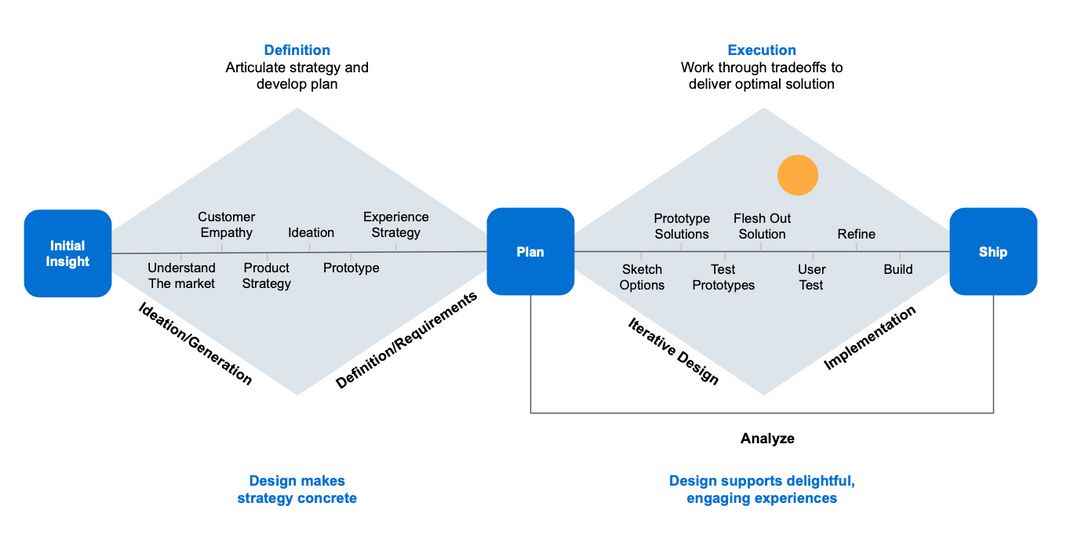
The 1st diamond.
Definition a.k.a. "Build the right thing" is where the team articulate strategy, brainstorm ideas, conduct user research, understand user's needs and everything in between to validate the solutions.
User research.
From internal feedback.
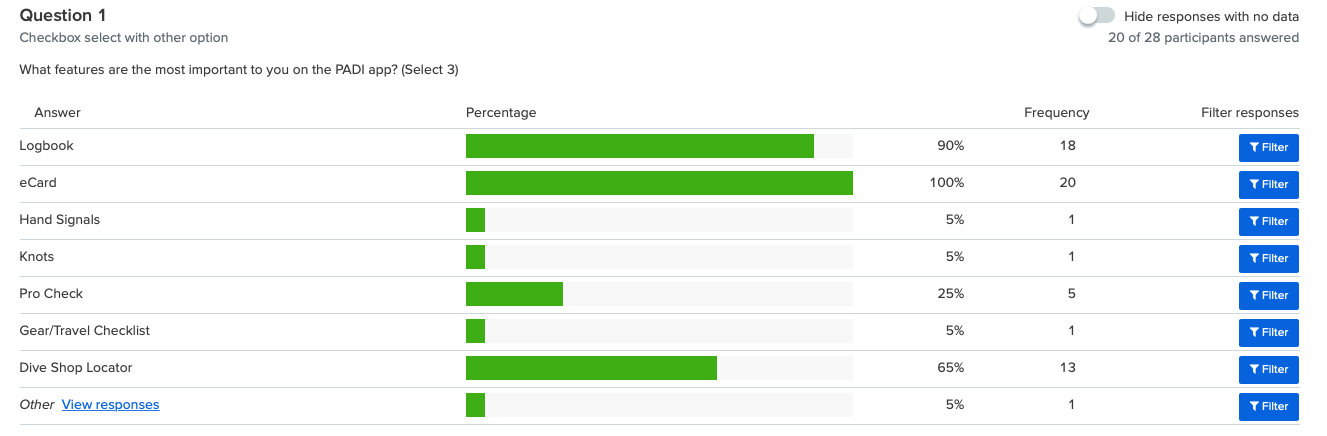
To get started, we want to get to know our users' needs a little better. Since most of our teammates are PADI experts, and many of them are in touch with customers on a daily basis, we decide to reach out to our internal people and ask them a simple question, "What features are the most important to you on the PADI app?" with the option to select up to 3 features.
key findings
While "eCards" and "Dive Shop Locator" are expected, "Logbook" surprises our team as a 2nd most wanted feature. Obviously divers want to log their dives, and doing so with the mobile app would be most convenient for them. Other things we learn are:
- Special characters currently cause an issue with students receiving their eCards.
- Dive Shop Locator would be beneficial for both users and dive shop owners.Links to digital products, PRO site.
- Offline access to some features/functionalities of the app.
- Personalized info on the Home/Discover section.
- Custom PADI courses to present to students depending on their diving level.
User persona & journey.
Connect the dots.
Over 90% of our users are Open Water certified, the most basic training. Therefore the app should focus on helping these users to navigate around easily, find the important features in no more than 3 taps, mostly 2.
Low-fidelity wireframes.
The visual begins.
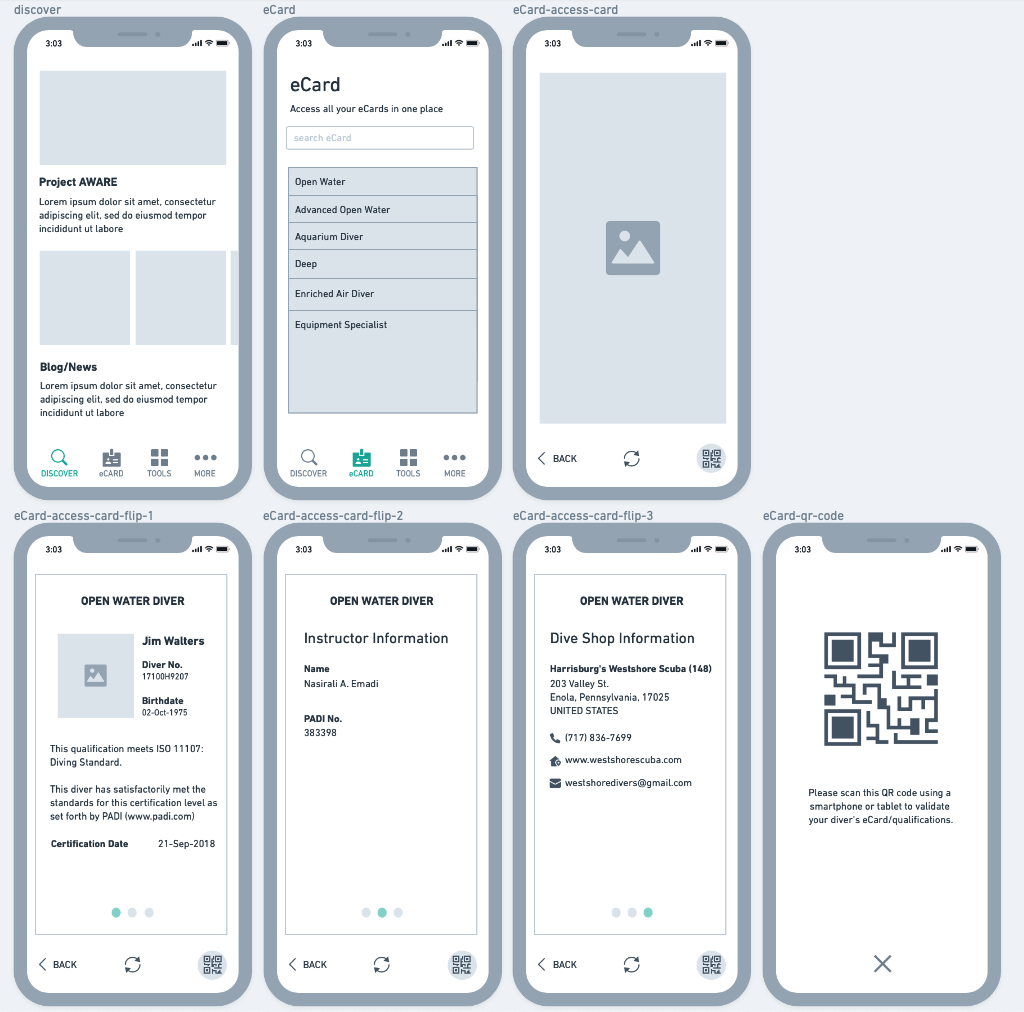
We quickly sketch out the wireframe in order to test out our ideas. In this phase, mistakes are expected. We want to make mistakes fast, learn fast and iterate fast.
"Test early, test often" is what we focus on the process until we figure out what works, what doesn't for our users.

feedbacks
Getting feedback early and often is crucial to our process. While acknowledging what the users might want in the app, we want to make sure our understanding aligns well with what the users actually expect.
what we've learned
1. Dive Shop Locator (DSL) is essential for divers who travel a lot and want to make last-minute dive.
2. Provide a better option in terms of diving education for people to choose from.
3. In select regions, eCards will be provided for free while the rest divers must purchase to access it. There should be a better way to send a message and allow divers to buy eCards if needed.
4. Provide direct access to PADI worldwide support.
5. More info about diving, such as gears, community, travel deals.
Mobile app execution.
The 2nd diamond.
Execution a.k.a. "Build the thing right" is the 2nd stage, also the final one, when it comes to the UX design process. In this stage, prototype solutions are provided with variations to conduct deeper usability testing.
During the testing process, we will refine the final solution, determine the product has met expectations for both business and user goals, then get it ready to hand off to the engineering team to start development.
High-fidelity design.
Putting the work together.
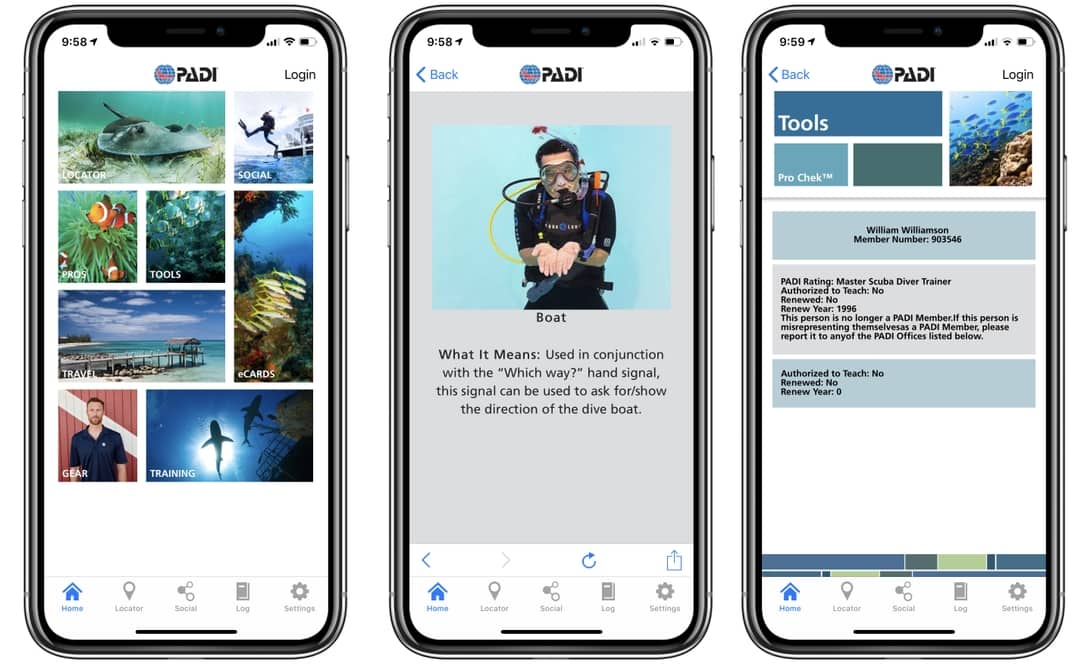
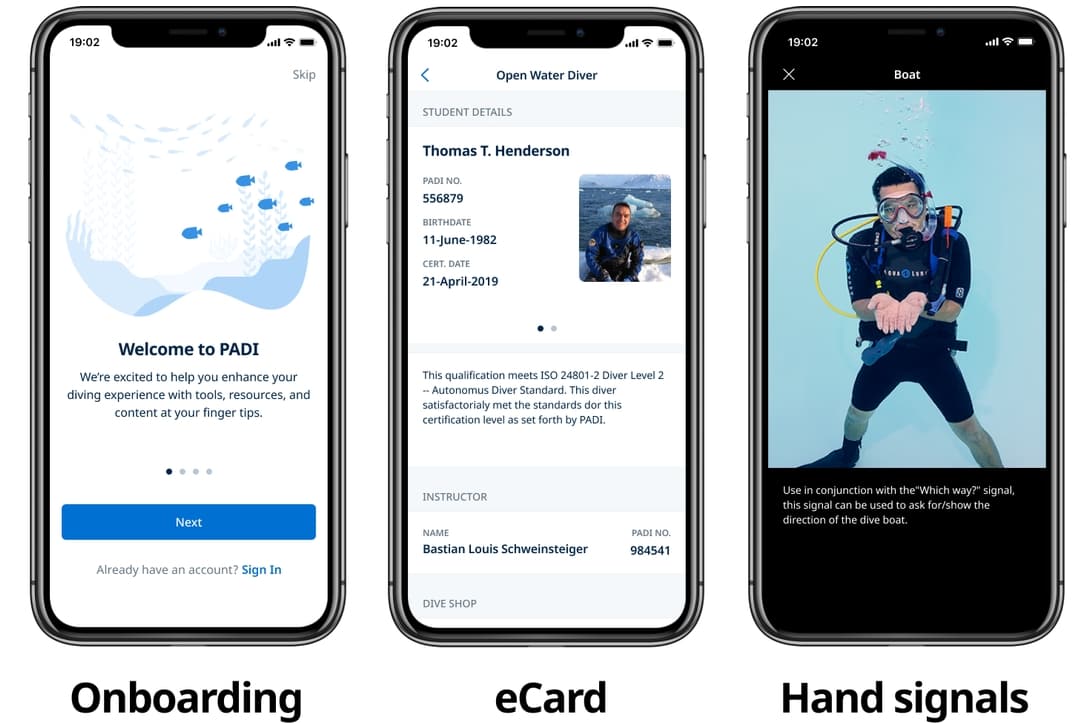
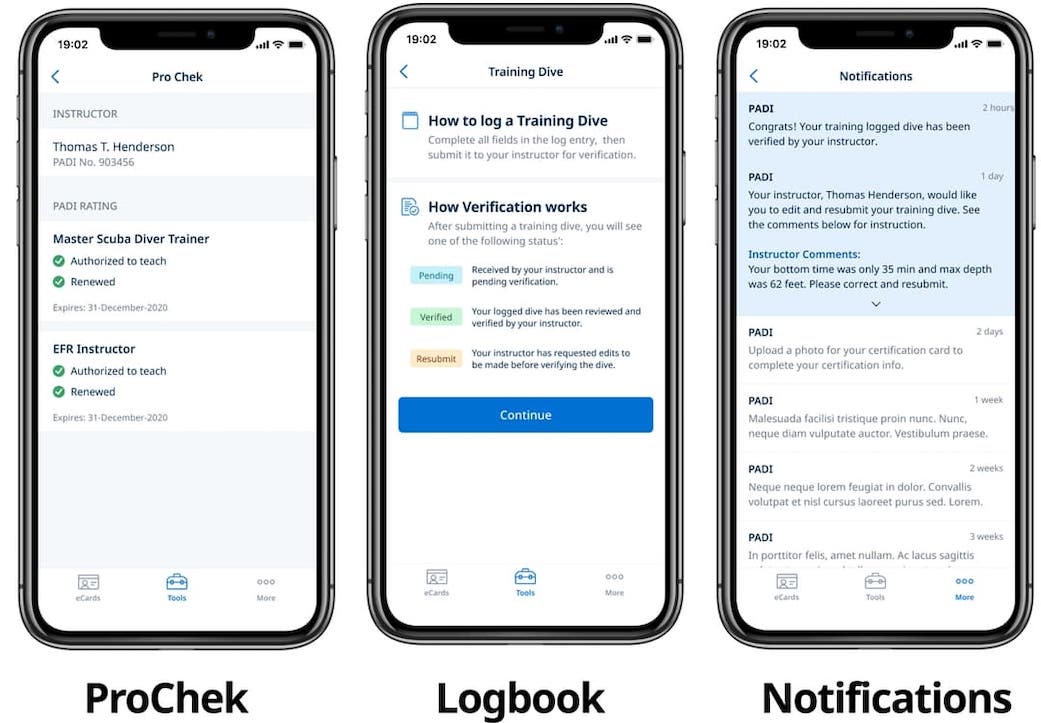
Here comes the most exciting part of the process: the high-fidelity design. Partnering with our Senior UI Designer, Arron, we collaborate to put together what we've learned so far for the past couple weeks to come up with the all-new designed mobile app.
Usability testing.
The more, the better.
Now we have the design which excites many people, including our own team. This is what we've been waiting for a long time to upgrade our current yet buggy and outdated app.
Although it is the exciting moment, we still want to be sure our product is easy to use and navigate around to help users find what they're looking for. So we conduct another testing with some random users who have done scuba diving. Below is one of the feedbacks we receive from the test.
key findings
- Offline accessibility is desired (Logbook, Hand Signals).
- Main features are easily accessible within a few taps.
-No confusion was found.Information on how to advance to higher level courses.
- Connection/advice from professionals where beginners can learn more about scuba diving.
- Relevant content on Discover: news, dive gear, articles and ability to customize the content.
-No major problem was found.
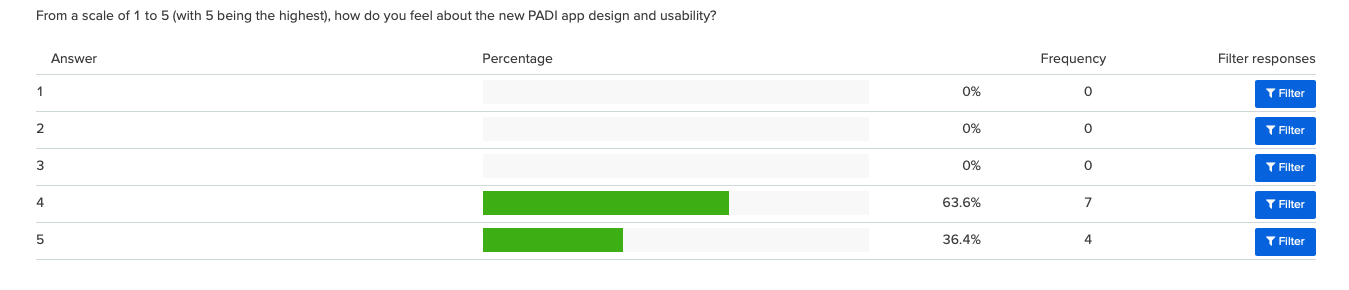
- On a scale from 1 to 5, users rated 63.6% on 4 and 36.4% on 5, strongly indicates what we have is what the real users actually want.
Delivery & handoff.
The collaboration continues.
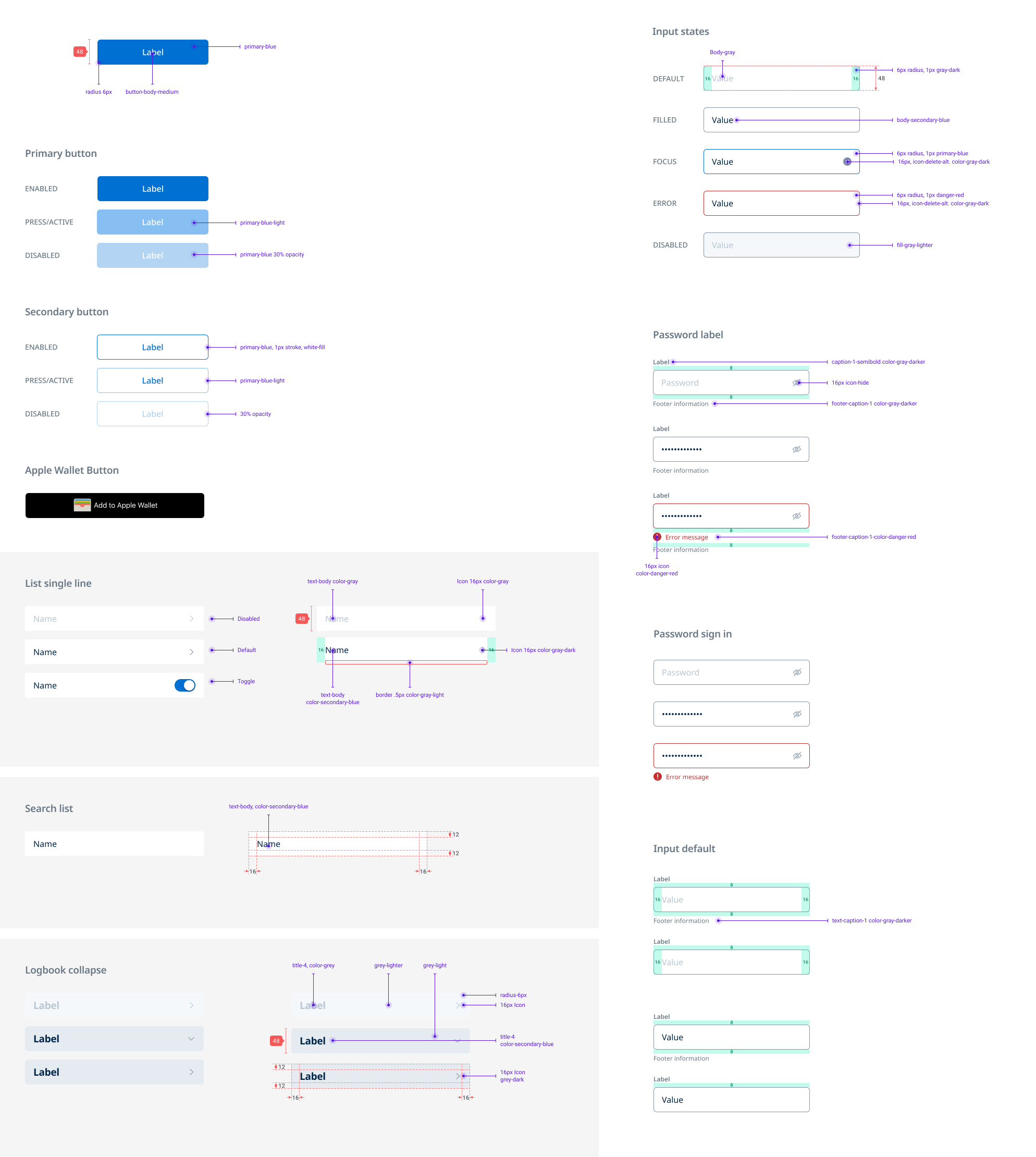
After reaching the highest satisfaction from our users, the design team start putting together the components needed before handing off to development team. Putting together the details will make our engineers' life a lot easier, as they appreciate our effort and also will speed up the development progress.
Conclusion.
Rebuilding this new PADI mobile app is a exciting yet challenging work that takes us over 2 months from the beginning of brainstorming to then end of handing it off to engineers, and we're not done yet. We're still supporting the engineer team to build the app as we constantly conduct test using Test Flight (iOS) and Android Studio (Android).
During the process, we've learned many valuable lessons, from approaching our potential users, preparing open-ended questions, receiving constructive feedback to collaborating closely and efficiently with the team of PM, designers, scrum masters, stakeholders and engineers under SCRUM environment.
update
As of May 2020, the new app ranks 4.7 stars on the iOS App Store, up from 1.7 stars.